

A shopping center can be repainted while tenants stay open, but only if the job is planned around the storefronts, not just the walls. For Tampa Bay property managers and owners, that means a written coating system, a clear sequence by section, advance notice to every tenant, and a crew that keeps entrances, walkways and parking usable every day.
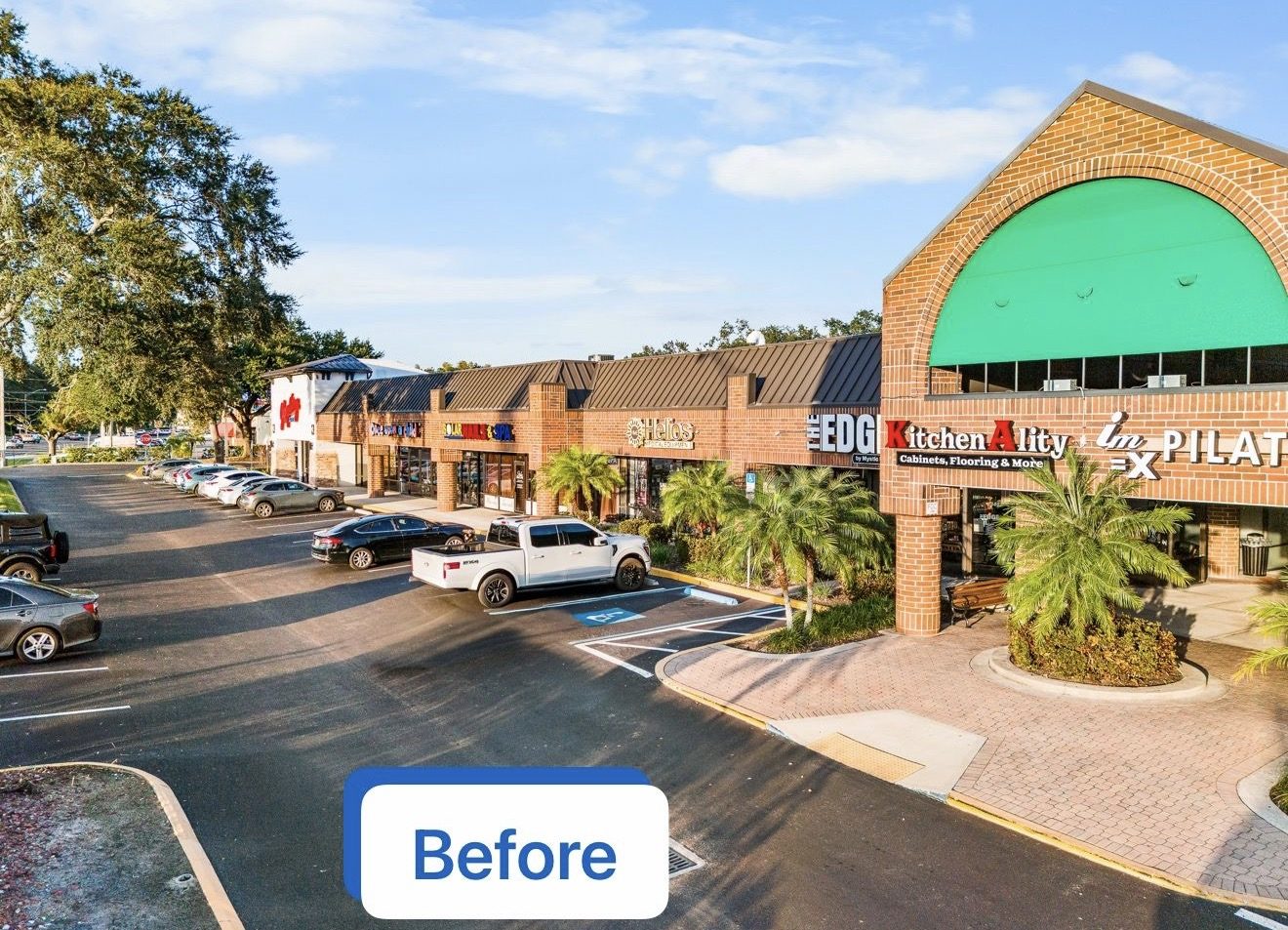
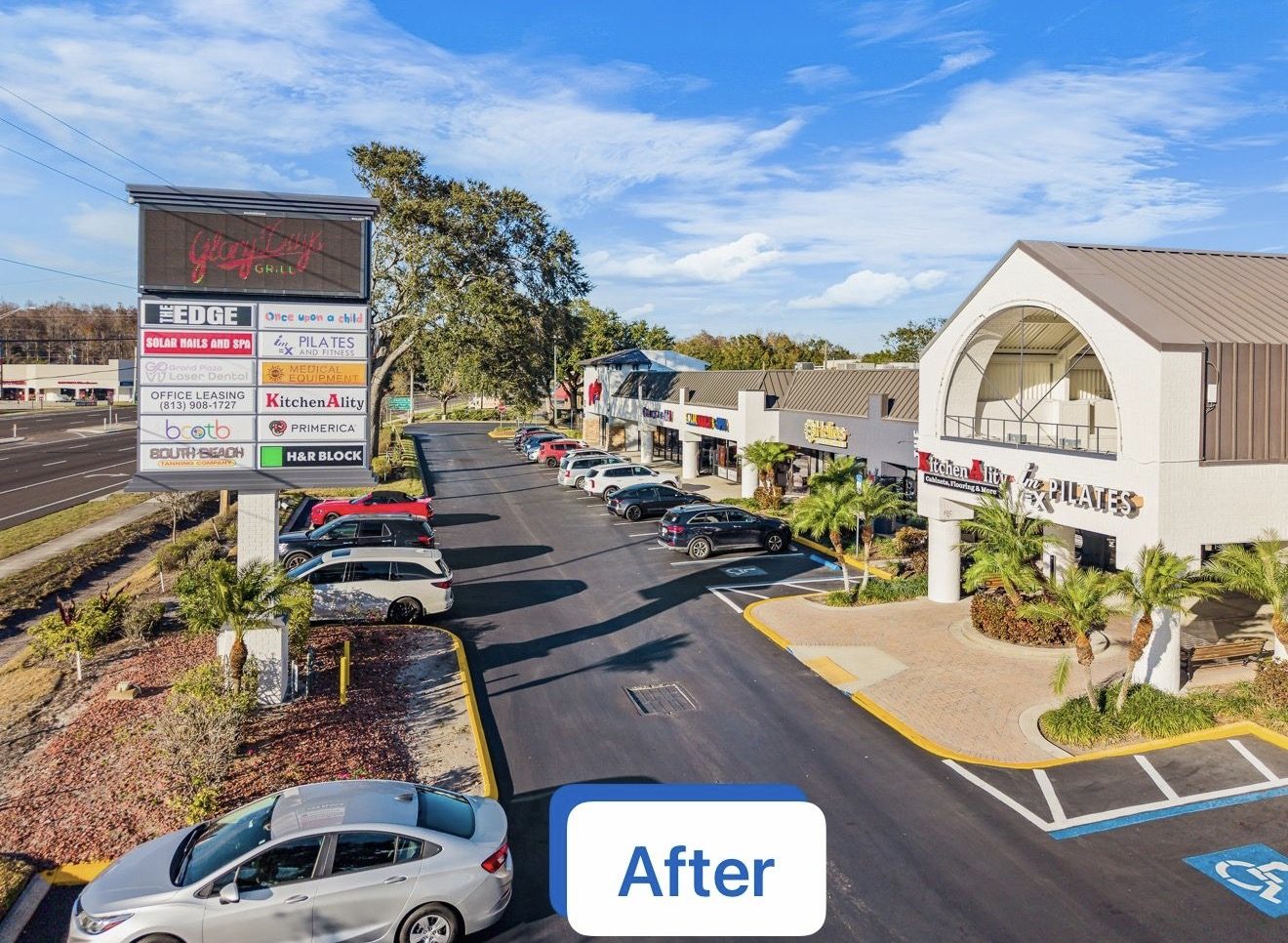
Grand Plaza Shopping Center in Carrollwood, managed by Cushman & Wakefield, is a good example. We completed a full exterior repaint that took the center from dated red brick to a clean, bright facade. Here is what property managers should plan for on a retail repaint, using Grand Plaza as the example, and what to ask any contractor before work starts. You can see the before and after photos and video on our projects page.
1. Decide what the repaint has to accomplish
Every retail repaint starts with the owner’s goal. Some centers need the existing colors renewed and the surfaces protected for another cycle. Others, like Grand Plaza, need a bigger change. At Grand Plaza, the red brick was painted, moving the center to a white facade with gray accents.
Painting brick is a long-term decision. Unpainted brick doesn’t need a repaint schedule. Once it is coated, it does. That is a reasonable trade for many owners, but it should be made on purpose, with the repaint cycle in the budget.
Ask your contractor: What surfaces are included: brick, stucco, columns, fascia, soffits, canopy ceilings, metal roof edges, doors, bollards and car stops? What is excluded? Get it in writing.
2. Specify the coating system for each substrate
A shopping center usually has more than one surface: brick or block, stucco, metal and wood trim. Each needs the right primer or conditioner and finish, applied to the manufacturer’s specification. We match the coating system to the substrate, which is the same approach we use on every repaint, from retail centers to condominiums.
Prep matters most on masonry. Brick has to be cleaned, allowed to dry and checked before anything is applied. Loose or chalky material, staining and any cracking or mortar issues should be flagged to the owner before coating, not painted over.
Ask your contractor: Which products and how many coats will go on each surface? Is the system written into the proposal, and will you follow the manufacturer’s application requirements?
3. Plan the sequence around open storefronts
On a retail center, the sequence is the schedule. Crews work one section of the building at a time so the rest of the center operates normally. Before work reaches a storefront, the glass and entry are masked and the work area in front of it is taped off, so customers can see where to walk and park.
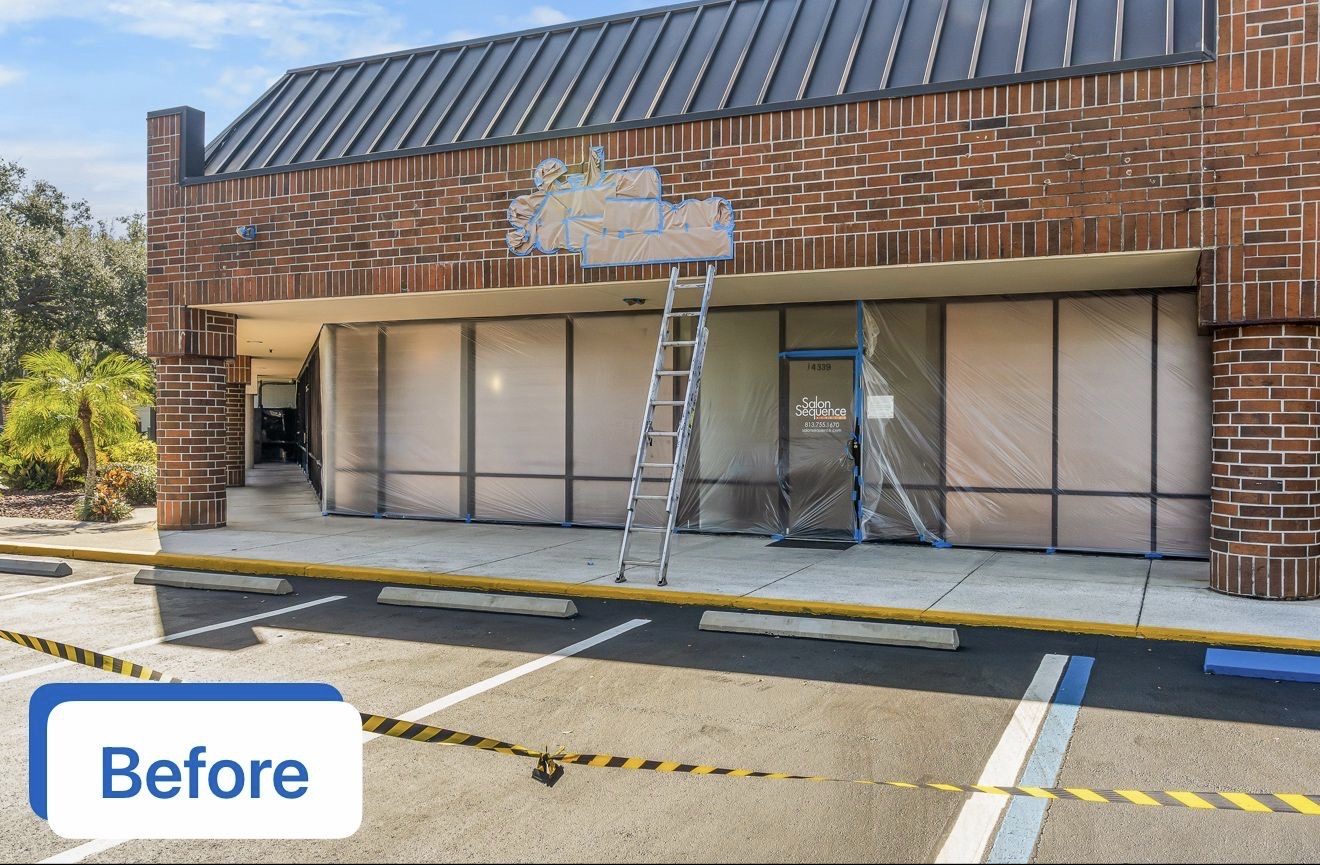
Tenants have different needs. A salon, a restaurant and an office tenant don’t open at the same hours or handle disruption the same way. The plan should account for that before the first day, not after the first complaint.
Ask your contractor: How will you sequence the center? How much notice will each tenant get before you reach their storefront? Which entrances and walkways stay open while you work?
4. Settle signs, color approval and tenant notices early
Tenant signs are mounted on the same walls being painted. Decide up front whether signs will be masked and painted around or removed and reinstalled, and who is responsible for each. Sign removal and wiring are usually handled by the tenant’s sign company, not the painter.
Color approval belongs to the owner, and on a color change it should be settled before mobilization. Then the property manager and contractor can send tenants one clear notice: what is happening, when it reaches their space, and who to call with a concern.
Ask your contractor: Who is our single point of contact during the project? How do tenants report a problem, and how fast is it handled?
5. Keep the center clean and safe every day
Customers judge a center by what they see walking in. Daily cleanup, organized staging and clearly marked work areas keep the property open for business and keep the property manager from fielding tenant complaints. It is the same standard we hold on occupied condominiums, which we covered in our post on repainting an occupied high-rise condo.
6. Protect the building, not just the look
Florida sun, rain and humidity are hard on retail exteriors. A repaint is also the right time to check the surfaces that keep water out. Sealant around storefront frames, penetrations and joints should be inspected, and failed sealant replaced before the finish goes on. Hairline and surface cracks in stucco should be repaired and prepped so the coating lasts. Our services cover pressure washing, sealant replacement, cosmetic stucco repair and waterproofing coatings along with the painting.
Grand Plaza isn’t the only retail center we have repainted. We also completed an exterior repaint of Highland Square Shopping Center, a multi-tenant center in Inverness.
Retail repaint checklist for property managers and owners
- Written scope listing every surface included and excluded
- Coating system by substrate, with the manufacturer named
- Brick and masonry prep plan, with any issues flagged to the owner before coating
- Color approval by the owner before mobilization
- Sequence by section, with tenant notice before work reaches each storefront
- Entrances, walkways and parking kept usable, with work areas taped off
- Plan for tenant signs: masked in place or removed by the tenant’s sign company
- Sealant inspection and replacement where it has failed
- One named point of contact for the property manager and tenants
- Daily cleanup and organized staging
- Proof of license and insurance, with the owner and manager listed as required
- Punch list and final walkthrough with the property manager
Frequently asked questions
Can a shopping center be repainted while tenants stay open?
Yes. Retail centers are routinely repainted around open storefronts. The work is sequenced section by section, entrances and walkways are kept usable, work areas are taped off, and tenants are told in advance when crews will reach their storefront.
Should a brick shopping center be painted?
It depends on the owner’s goals for the property. Painting brick can change the look of a dated center, as it did at Grand Plaza in Carrollwood, but once brick is coated it becomes part of the property’s repaint cycle. The brick has to be cleaned, dry and coated with a system made for masonry.
Who should a property manager contact first about a retail center repaint?
Start with the owner’s goals and budget, then bring in a commercial painting contractor early enough to walk the center, review the surfaces, recommend a coating system and help plan the sequence around tenants.
Planning a shopping center repaint in Tampa Bay?
Bayshore Painters repaints retail centers, office buildings, hotels and multifamily communities across Tampa, St. Petersburg, Clearwater, Sarasota and Central Florida. See Grand Plaza and more completed projects, read how we work with retail properties, or request a property assessment and we will walk the center with you.