

There is no fixed number of years. A Florida condo should be repainted when the exterior coating stops protecting the building: when it chalks, fades, cracks or peels, or when the sealants around windows and joints have failed. Boards should plan an expected cycle in the reserve budget, then confirm the timing with a condition inspection rather than the calendar alone.
Sun, humidity, wind-driven rain and salt air all work on a coating every day, and how fast they wear it down depends on the building, the coating system and how well the last job was done. Here is how condo boards and community association managers in Tampa Bay can tell when it is time, how to plan for it, and what to ask a contractor. We use our exterior repaint at Dolphin Watch in Tierra Verde as an example.
Why there is no single answer
Two condo buildings painted in the same year can need very different things a few years later. The main factors are:
- The coating system. What primer or conditioner went on, which finish, how many coats and at what thickness. A system matched to the substrate and applied to the manufacturer’s specification lasts longer than a single coat over poor prep.
- The substrate. Stucco, block, wood trim and metal railings all age differently. Many condo exteriors have all four.
- Exposure. South and west elevations take the most sun. Buildings near the water deal with salt air and wind-driven rain.
- The quality of the last job. Cleaning, crack and sealant work, and dry time before coating decide how long the paint stays bonded.
- Color. Darker and brighter colors tend to show fading sooner than lighter, neutral ones.
What Florida weather does to an exterior coating
UV exposure breaks down the binder in paint over time. The first sign is usually chalking, a powdery residue that comes off on your hand, followed by fading. Once the film thins, it protects less and lets more moisture into the wall.
Humidity and rain bring mildew and staining, especially on shaded walls, soffits and breezeways. Water that gets in through cracks, failed caulk or open joints can push the coating off from behind, which shows up as blistering and peeling. Near the Gulf and the bay, salt air speeds up rust on railings, doors and other metal.
Signs it is time to repaint
Walk the property, or have your contractor walk it with you, and look for:
- Chalking: rub a dark cloth on the wall and see how much color comes off
- Fading that is uneven from one elevation to another
- Hairline and map cracking in the stucco
- Peeling, flaking or blistering paint
- Caulk and sealants that are cracked, shrunken or pulling away at windows, doors and joints
- Rust on railings, doors, frames and other metal
- Mildew and dark staining that comes back soon after cleaning
- Bare or worn spots on high-traffic areas such as breezeways and stair landings
- Water stains inside units near windows or exterior walls
One or two of these on a single wall may call for maintenance and touch-up. When they show up across the property, the coating is near the end of its service life, and the longer it waits, the more prep and repair the next job will need.
Our repairs are cosmetic and nonstructural. If cracks are wide, growing, or come with spalling, rust staining from inside the wall or other signs of a structural problem, the board should bring in an engineer before any painting is planned.
Ask your contractor: Will you walk every elevation with us and give us a written condition summary, with photos, of what you found?
A real example: Dolphin Watch in Tierra Verde
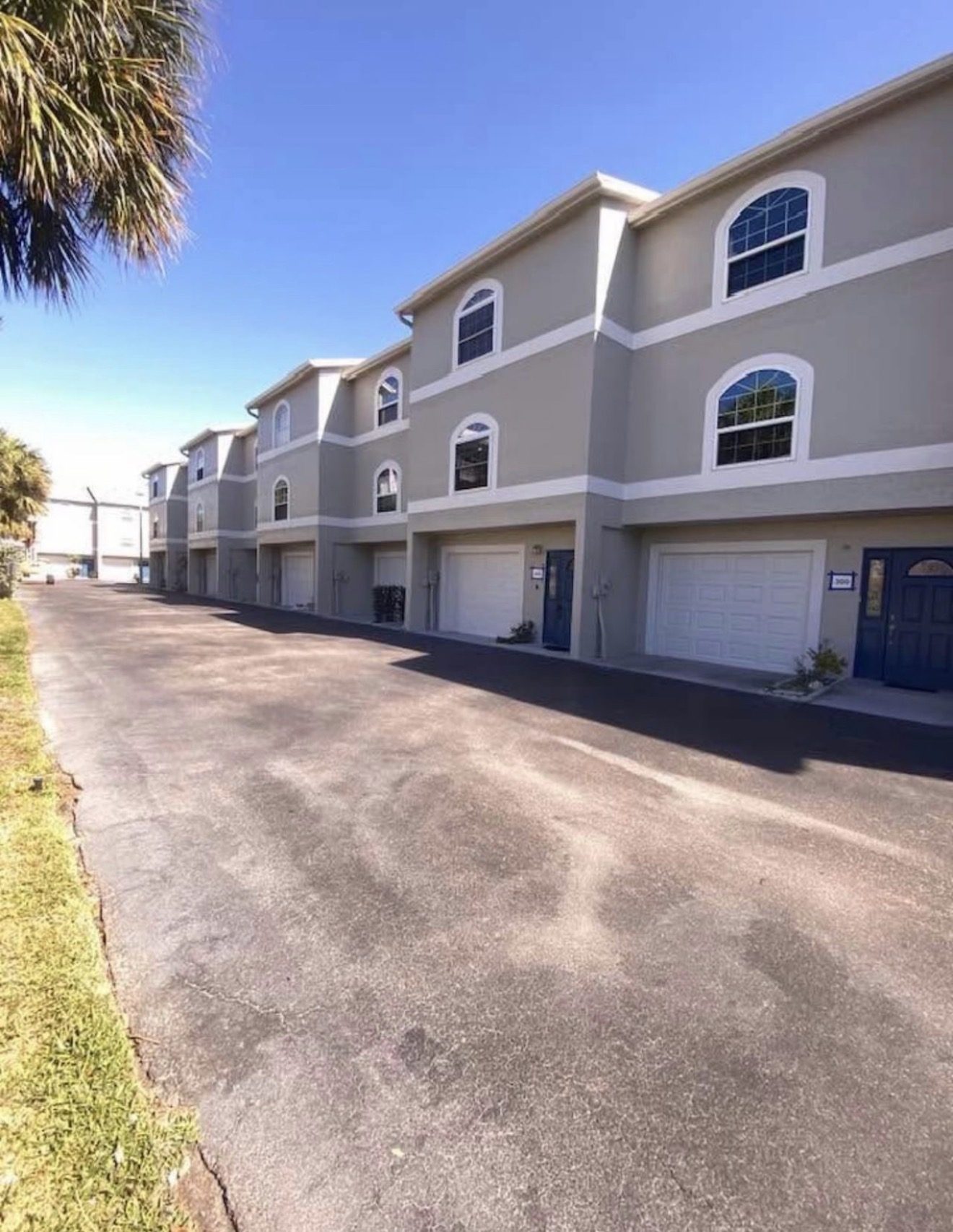
Dolphin Watch is a condominium community of three-story stucco townhome buildings in Tierra Verde, at the mouth of Tampa Bay. Before the project, the exterior was weathered gray stucco. Bayshore completed a full exterior repaint of the buildings, including the stucco, garage doors and entry doors.
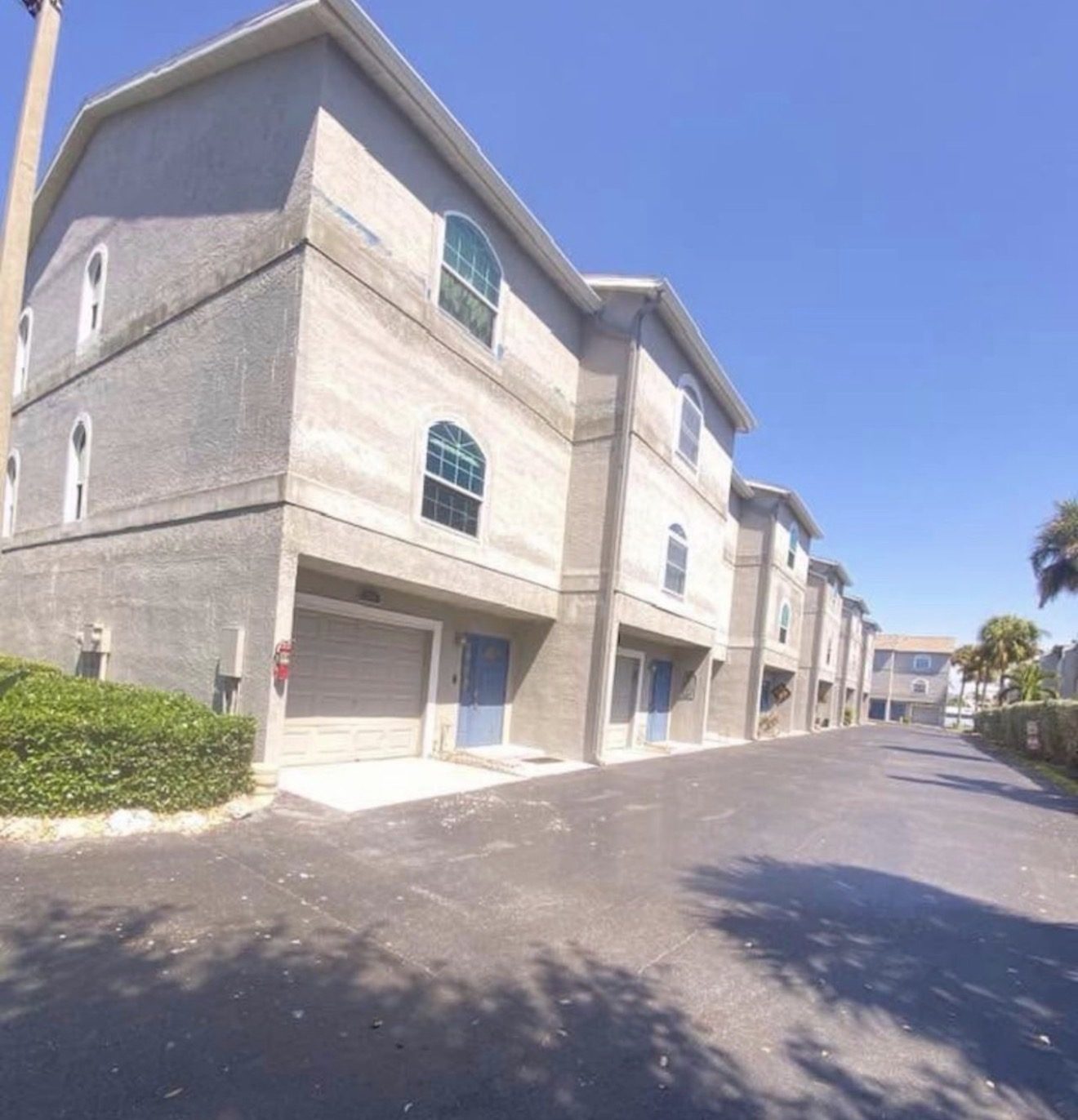
On a job like this, prep comes before paint. Surfaces are cleaned and allowed to dry, stucco and sealants are checked and repaired where needed, and windows, fixtures and anything not being painted are masked before coating starts.
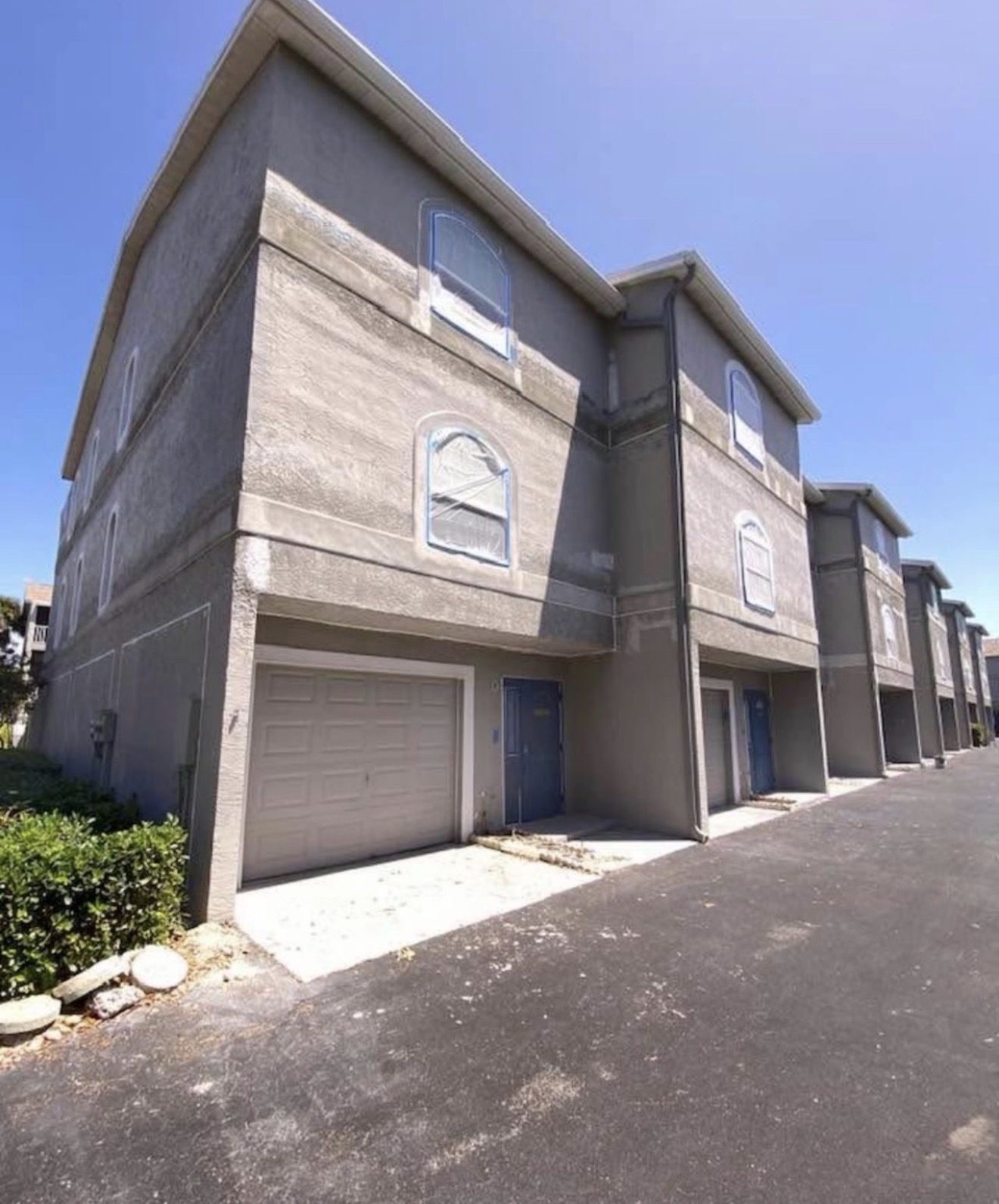
You can see the Dolphin Watch before and after photos alongside our other condo, HOA and commercial work on our projects page.
Put the repaint cycle in the reserve budget
For Florida condominiums, exterior painting is not just a maintenance decision. Under Florida’s condominium reserve rule, Fla. Admin. Code R. 61B-22.005, the association budget must include reserves for capital expenditures and deferred maintenance, including painting, for items over $10,000, funded over the estimated remaining useful life of the asset.
That makes “how often” a budget question as well as a coatings question. The board and its reserve professional set the numbers. What a painting contractor can add is an honest read on the current coating: how much life it appears to have left, which elevations are wearing fastest, and whether sealants or metal will need attention before the next full repaint. We only speak to the painting and waterproofing component, not structural items.
Ask your contractor: Based on what you see today, does our current reserve timing for painting look realistic? Which areas would you watch most closely?
The system you choose now sets the next cycle
The best way to stretch the time between repaints is to get the current one right. That means a written coating system for each substrate, with the manufacturer and products named, sealant replacement where the old caulk has failed, nonstructural stucco crack repair before coating, and application to the manufacturer’s requirements. We apply the same approach on every repaint, from high-rise condominiums like Bayshore Royal to townhome communities like Dolphin Watch. Our services page covers exterior repainting, waterproofing and protective coatings, caulking and sealants, and stucco and metal work.
If your building is occupied and taller than a few stories, read how to repaint an occupied high-rise condo in Florida for what to plan around residents.
Ask your contractor: What coating system will go on each surface, and is it written into the proposal? How will you handle sealants and stucco cracks before painting?
Condo repaint timing checklist for boards and managers
- Know when the building was last painted and what system was used
- Walk every elevation, not just the front, at least once a year and after major storms
- Do a chalk test on the sunniest walls
- Inspect caulk and sealants at windows, doors and joints
- Check railings, doors and metal for rust
- Log cracks, peeling and staining with photos and locations
- Ask residents to report water stains inside units
- Compare what you find with the painting line in the reserve budget
- Get a written condition summary from a commercial painting contractor
- Refer any structural concerns to an engineer before painting is planned
Frequently asked questions
How often should a condo in Florida be repainted?
There is no fixed number of years. It depends on the coating system, the substrate, sun and salt exposure, and the quality of the last job. Boards should plan an expected cycle in the reserve budget and confirm the timing with a condition inspection that looks for chalking, fading, cracking, peeling and failed sealants.
What are the signs a condo building needs to be repainted?
Common signs are chalking that rubs off on your hand, uneven fading, hairline cracking in stucco, peeling or blistering paint, failed caulk around windows and joints, rust on railings and metal, recurring mildew, and water stains inside units near exterior walls.
Do Florida condo associations have to reserve for painting?
Florida’s reserve rule for condominiums, Fla. Admin. Code R. 61B-22.005, requires the budget to include reserves for capital expenditures and deferred maintenance, including painting, for items over $10,000, funded over the asset’s estimated remaining useful life. The board and its reserve professional set the amounts.
Not sure where your building stands?
Bayshore Painters repaints condominiums, HOA and apartment communities, and commercial properties across Tampa, St. Petersburg, Clearwater, Sarasota and Central Florida. See how we work with multifamily and commercial properties, or request a property assessment and we will walk the building with you and tell you what we see.